Mission 5. Sinistrus, Herculaneum, and the Chase¶
1. Episode Overview¶
Essential Question
Who were the Romans?
ACTFL Proficiency Benchmarks — Intermediate Low
- Interpretive: I can understand the main idea and some related pieces of information on familiar topics from sentences and series of connected sentences in texts that are spoken, written, or signed.
- Cultural Investigation: I can compare products and practices to understand perspectives from a variety of cultures and communities, including my own.
Cultural & Historical Learning Targets — student-facing
- Explain what a shared nōmen did and did not mean: the gēns, its branches, and the cognōmen that told them apart.
- Analyze how the gēns Iūlia's claimed descent from Venus, and Augustus's uses of myth, turned a story into a claim to power.
- Describe how Romans read a scroll (volūmen, scrīptiō continua) and an inscription (capitals, interpuncts, abbreviation), and use that knowledge to decipher both.
- Evaluate the significance of Herculaneum and its fate, and summarize the region of Campania.
- Design a route around Herculaneum by reading the Roman town plan: decumānus, cardō, the forum, and the īnsulae.
Grammatical Learning Objectives — teacher-facing
- The dative case and the indirect object; the dative singular by declension (-ae, -ō, -ī); mihi, tibi, and eī for recognition (5.1).
- The dative pronouns mihi and tibi made productive; comparative -ior formation and quam (5.2).
- Completing the present tense with -mus and -tis and the esse plural; comparative production including the irregulars melior, peior, maior, minor, plūs (5.3).
- Comparatives spiral across the mission from recognition through formation to free production, and datives ride every act of giving and telling in the readings.
Lapis thread
Mission 5 introduces the operation's antagonist in person. Pūblius Horātius Sinistrus appears in Caecilius's atrium, jokes about having seen the team at Troy, and, once alone with them, names the Lapis outright and pitches the new world the powerful are building, closing on the question quis fābulam scrībit? The papyrus stolen from Marcus's house in Mission 2 finally reads clearly: the forum of Hercules is Herculaneum, where a hidden inscription declares litterae habent viam ad potentiam. When Sinistrus and two thugs drive the team out of the town, Sextus names the enemy at last: the Societas Potentium, who seek the Lapis for power where he seeks it for safekeeping. Beneath the present-day plot, the serial Aeneas KEY-TEXTs carry the Lapis's mythic past westward, from the wanderings through Carthage to the mouth of the underworld.
Instructor background — withheld from students
The 5.1 KEY-TEXT withholds two identities on purpose: the eques carrying Titus's letter is Sinistrus, and the vir potēns who receives it is Marcus Maecēnās, and the 5.3 KEY-TEXT names them both as the payoff. Do not confirm the identification early; the reader infers it from the wrongness cues (shadows falling too long and at wrong angles, the innkeeper's fear), which are the first appearance of the wrong-angles motif that marks Sinistrus throughout the operation. The mission's central mechanic is the perception block: Sextus cannot perceive Sinistrus at all, and the mission demonstrates it three clean times (5.2.a, 5.3.a, 5.3.b). Never let Sextus say "who?", look puzzled, or acknowledge a gap; for him there is no gap, and the team's own hypothesis-forming about why is the meta-cognitive payoff. Sinistrus himself is not simply hostile: he tests, provokes, and is genuinely curious whether the team can surprise him, and his facts about Gāius Recentius (the Esquiline villa, the love of Ovid, the claimed descent from Ascanius) are true as far as canon goes. Two quiet seeds are planted for much later: the Titus informational text names the Arcus Titī, and the recruits in the 5.2 KEY-TEXT let slip a praetorium far off in Egypt, which pays off in Mission 14. The carpe cēlum chisel pun in that text is intentional. The Aeneas readings are framed at the literal level here because evaluating the journey's significance is Mission 6's objective. And never foreshadow the eruption or Sextus's fate: no one in 79 CE knows the mountain is a volcano.
2. Shared CODEX Backbone¶
Each approach works from the same CODEX pages. For what the sections contain and how students reach them, see The CODEX. Each episode's ATTUNEMENT set closes with an inline Memorātiō.
CODEX pages: CODEX 5.1 · CODEX 5.2 · CODEX 5.3
KEY-TEXTs
- 5.1: equēs ad Pompēiōs contendit (an imperial rider carries the new emperor's letter to a powerful man near Pompeii, identities withheld), with a Visual Walkthrough, and Aenēās Errat (the wanderings past Scylla and Charybdis, the Cyclopes, and the storm to a new shore).
- 5.2: tīrōnēs Potentium (two recruits of the Powerful inscribe stone, grumble over guard duty, and let slip a praetorium far off in Egypt) and Īnfēlix Dīdō (the Carthage leg: Mercury's order, Dido's death on the pyre, Aeneas sailing on), each with a Visual Walkthrough.
- 5.3: Sinistrus cum Marcō (the rider of 5.1 named at last, proposing to Marcus Maecēnās that they cultivate Caecilius to reach the Recentiī), with a Visual Walkthrough, and Aenēās ad Rēgnum Plūtōnis (the Sibyl, the golden bough, Charon's crossing, Palinurus among the shades).
Informational Texts
- 5.1: Vespasiānus and Titus, the Flavian background behind the rider's letter.
- 5.2: Herculāneum (the town as urbs ōtiī, its fate, the Villa of the Papyri and Philodemus) and Palaestra (the palaestra and the bath sequence from apodytērium to frīgidārium).
- 5.3: Sibylla Cūmāna (Cumae as the Greek colony that carried writing to Italy, the Sibyl, and the Sibylline Books legend).
GRAMMATICA
- 5.1: a third case, the dative, and the indirect object; the dative singular by declension; mihi, tibi, and eī on sight.
- 5.2: the dative pronouns mihi and tibi; the comparative -ior shape and quam ("than").
- 5.3: completing the present tense (-mus, -tis, and the esse plural); comparative production, including the irregulars, with a video briefing embedded on the tab.
VERBA
- 5.1: potest, meus, bonus, it, vōx.
- 5.2: nec, iam, pars, verbum, prope.
- 5.3: tum, mors, dūcit, gravis, timet.
CULTURALIA
- 5.1: the tria nōmina revisited: the gēns, its branches, and the cognōmen; patrician and plebeian lines; the gēns Iūlia's descent from Venus through Aeneas; Augustus and the uses of myth; the Pāx Rōmāna.
- 5.2: reading a scroll (volūmen, scrīptiō continua); reading an inscription (capitals, interpuncts, abbreviation, the Corpus Inscriptionum Latinarum); decipherment and the Rosetta Stone; Campania and Vesuvius.
- 5.3: reading a Roman town (the grid, decumānus and cardō, the forum, the īnsulae); Herculaneum on the ground; designing an escape route; the palaestra as cover.
ATTUNEMENT
- 5.1: five exercises building from an interpretive read on the rider KEY-TEXT, through the dative-as-third-role form task on its transfers, an open comprehension on the Aeneas reading, a CULTURALIA comprehension with a perspective probe on names and power, and a Flavian dossier synthesized across both informational texts, closing with the inline Memorātiō.
- 5.2: six exercises: two form tasks (dative-pronoun recognition and comparative production), comprehensions on both informational texts and both KEY-TEXTs, and the mission's once-per-mission Products, Practices, and Perspectives organizer on the written word and power, closing with the inline Memorātiō.
- 5.3: seven exercises ramped literal to interpretive: three form tasks (singular-to-plural transformation, the dō sentence-building grid, and comparative production into Latin), an event-ordering task on the underworld KEY-TEXT, a supporting-detail audit on the Sibyl text, the character-profile inference grid on Sinistrus and Marcus that is the mission's interpretive centerpiece, and a CULTURALIA comprehension whose final step is the escape route itself, closing with the inline Memorātiō.
3. Episodes¶
The story beats are the same across all tracks. Track-specific links and running notes are in §4.
Numbering map (Episode 5): 5.1 (Sinistrus in Caecilius's Atrium) = prompts 5.1.a / 5.1.b; 5.2 (Herculaneum and the Hidden Inscription) = 5.2.a / 5.2.b; 5.3 (The Chase and the Societas Potentium) = 5.3.a / 5.3.b.
5.1, Sinistrus in Caecilius's Atrium¶
The team returns to Caecilius's atrium and something is wrong: the walls meet at angles that are not quite right, and Caecilius does not walk in so much as appear. He admits a guest, a man who shines the way only Sextus has shone before, and introduces him with delight as Pūblius Horātius Sinistrus, a new friend from Rome. Sinistrus jokes that surely the young people saw him at Troy, a remark that sails past Caecilius as city wit, then sets the hook: does the team know a Gāius Recentius, who lives in Rome? The team must find out what this stranger knows about the man who shares their name. Then Caecilius withdraws, and the urbane smile falls off. Sinistrus states their business flatly, he knows they work for Sextus and seek the Lapis, warns of grave danger on their road, sketches the new world the powerful are building, and closes at the edge of something larger: hic mundus fābula est. sed quis fābulam scrībit? The team must answer him from what they know of the mission and of Roman culture.
5.2, Herculaneum and the Hidden Inscription¶
Back at Sextus's villa, the team finds him jubilant: the papyrus stolen from Marcus's house now reads clearly, and the forum Herculis it names is Herculaneum. He walks the team down the coast road and through the town, past the palaestra and up a main street where the houses are more beautiful and the streets smoother than anything in Pompeii, to the forum in the town's northern part. There he sets the task: iānuam quaerite. Searching among the plaques and statues, the team finds the image of a doorway carved into a wall, and beneath it a small, old inscription in which the door itself speaks: it gives roads to the lapis, it watches writing-tablets, and it counts itself among nōs servī who serve Rome and give people letters, et litterae habent viam ad potentiam. The prompt is honest that the inscription is not meant to be solved fully yet; some of its meaning arrives in later missions.
5.3, The Chase and the Societas Potentium¶
Sextus is still puzzling over the inscription when Sinistrus strides into the forum with a drawn sword and two shining men: monuī vōs! The TSTT throws a transient error, and Sextus, who cannot see Sinistrus at all, counts only two attackers, announces he can hold them, and orders the team to run. The chase is the episode: the team must lose the two thugs in Herculaneum's streets, turning the crowded forum, the pillared palaestra, and the town's regular grid to their advantage before slipping out to the open fields. On high ground outside the town, Sextus is waiting, shaken and relieved. Those men were not alone, he says, and gives the enemy its name: the Societas Potentium, powerful men who hunt the Lapis as a road to empire where he and the team seek only to keep it safe. The marching orders that close the mission point back to Pompeii, to Caecilius and Tiberius, and then to his villa: magnum labōrem habēmus.
4. Running the Mission¶
Immersion links:
Episode 5.1: Sinistrus in Caecilius's Atrium
-
Post 5.1.a and read it together for comprehension. The team is back in Caecilius's atrium, the angles of the room are subtly wrong, and Caecilius introduces a shining stranger, Pūblius Horātius Sinistrus, who jokes about Troy and asks whether the team knows a Gāius Recentius in Rome. Stop here, before anyone composes.
-
Before the team decides what to tell him, give them the weight of the question. Send them to the CULTURALIA section on what a shared nōmen does and does not mean: the gēns and its branches, the cognōmen that tells them apart, and how two people sharing a name were not therefore kin or equals. The stranger is not asking their name; he is claiming to share it, and the team should understand what answering him, either way, would hand him.
-
The team composes its probe of Sinistrus. Post your in-character agent response. See §5 Agent Craft for 5.1.a: the Gāius facts flow freely but every one ends in a question turned back on the team, warning Caecilius costs the team the hospitality frame, and silence gets funneled by Caecilius's etiquette rather than by Sinistrus.
-
Read KEY-TEXT A, equēs ad Pompēiōs contendit together now: somewhere on the road, an imperial rider carries the new emperor's letter toward a powerful man near Pompeii, and the shadows around him fall a little too long. The text withholds both identities on purpose; let the team notice that the wrongness in the inn rhymes with the wrongness in the atrium. A Visual Walkthrough on the tab supports the reading.
-
Work the What the Innkeeper Saw task, an interpretive read that moves from the main idea to the clues: why the innkeeper is afraid though never threatened, and what might matter to this rider more than money.
-
Introduce GRAMMATICA 5.1 directly out of that reading: the rider's story is built on acts of giving, and the person on the receiving end wears a third case, the dative. The tab builds the indirect object from the key-text's own sentences, gives the singular endings by declension, and asks only recognition of mihi, tibi, and eī for now, with a note to read past the -ior shapes until later in the mission.
-
Work the Who Receives It? task, which has the team choose the dative receiver in the key-text's transfers and watch how one ending changes who gives money to whom.
-
Read KEY-TEXT B, Aenēās Errat together: the next leg of the serial Aeneas story, past Scylla and Charybdis, the Cyclopes, and the storm to a new shore. Keep the reading at the literal level; what Aeneas's journey means is Mission 6's question, not this one's.
-
Work the Aeneas Wanders task, an open comprehension on that reading.
-
Bridge toward the second scene by returning to the CULTURALIA section, this time for its second half: the gēns Iūlia's claimed descent from Venus through the Aeneas the team has just been reading, and Augustus's uses of myth. The team is about to be asked, alone, who writes the story; this is the material a strong answer is made of.
-
Post 5.1.b. Caecilius withdraws, the mask drops, and Sinistrus names the team's business, warns of the danger on their road, and closes on quis fābulam scrībit? The team composes its answer from the mission and from Roman culture. Post your agent response; see §5 Agent Craft for 5.1.b: any substantive answer earns a sharp counter and then an unsettling drop of approval, silence is an honored posture the scene itself scripts, and force fails strangely rather than gently.
-
Work the Names and Power task, the CULTURALIA comprehension with its closing perspective probe: why would a people carry that much information in a name?
-
Read Informational Text A, Vespasiānus and Informational Text B, Titus together as background on the letter the rider carries: the Flavians are a new house, and Titus has been emperor for only a few months. These are background reading rather than a mission objective, so read them for the dossier that follows.
-
Work the Flavian Dossier task, which fills an intelligence chart from both texts and asks why a brand-new emperor might need allies among the powerful.
-
Close the episode with the inline Memorātiō, a short reflective write-up in the operative's voice: whom did they meet, what felt wrong about him, and what did he claim to know? Coach the form (third person, past tense, character point of view); the open questions this scene plants are exactly what the memorātiō is for.
-
Award LP for 5.1 per operative and mark ATTUNEMENT and KEY-TEXT completion in Mission Control.
Episode 5.2: Herculaneum and the Hidden Inscription
-
Post 5.2.a and read it together. Sextus, jubilant, has the team re-read Maecenas's papyrus, walks them down the coast to Herculaneum, through the palaestra and up the main street to the forum, and sets the task: iānuam quaerite. Stop here, before anyone decodes.
-
Before the team works the papyrus, give them the reader's craft it demands. Send them to the CULTURALIA section on reading a scroll: the volūmen unrolled with both hands, the narrow columns, the words run together in scrīptiō continua. An ancient reader worked through every word slowly, and that is exactly how Maecenas's riddle wants to be read.
-
The team composes its reading of the papyrus and its plan for the forum. Post your agent response. See §5 Agent Craft for 5.2.a: Sextus confirms a landed decode but floats the image-of-a-door idea only as a possibility so the find stays theirs, quotes the papyrus back at a team hunting a literal town gate, gives exactly one hint (the thing is small) when asked to solve it himself, and, if the team tries to tell him about Sinistrus, simply does not hear it: the first live demonstration of the perception block, played with total non-registration.
-
Read Informational Text A, Herculāneum together: the town the team has just walked, a small rich resort of leisure, its burial in 79 CE, and the Villa of the Papyri whose carbonized scrolls made it a byword for ancient reading.
-
Read Informational Text B, Palaestra together: the exercise ground the team passed on the way in, and the bath sequence from apodytērium to frīgidārium with its social life. Both texts serve the mission's own cultural scope, and the palaestra in particular repays attention: the team will want it again in 5.3.
-
Work the Herculāneum and the Baths task, a comprehension across both texts.
-
Introduce GRAMMATICA 5.2: the dative pronouns mihi and tibi the team has been reading on sight are now pinned down, and the -ior shape they were told to read past gets its rule, the comparative, with quam pointing to the thing compared. The walk into town supplied the examples (pulchriōrēs quam domūs Pompēiīs), and the Herculaneum text supplies more (minor quam Pompēiī, sed dītior), so teach it now while both are fresh.
-
Work the mihi, tibi, or eī? task, dative-pronoun recognition across frames drawn from the mission.
-
Work the Smaller Than Pompeii task, comparative production as a connected passage comparing the two towns, closing on a comparison no one in 79 CE could make: mōns Vesuvius perīculōsior erat quam omnēs urbēs.
-
Post 5.2.b. The team hunts the forum and finds the carved doorway with its small, old inscription. Before they interpret it, return to the CULTURALIA section for its second half: how an inscription is read (capitals, interpuncts, abbreviation), and the Rosetta Stone's deciphering move, using what you already understand to unlock what you do not. That move is exactly what the inscription asks of them.
-
The team composes its interpretation; the prompt itself says not to expect a full solution. Post your agent response. See §5 Agent Craft for 5.2.b: Sextus rewards every correctly lifted clause, contributes exactly one connection of his own (Maecenas was a writer among writers), leaves nōs servī honestly open, converts an overconfident theory into a recorded hypothesis for the memorātiō, and scaffolds a stuck team one sentence at a time. A team that copies the inscription onto its charta has armed a callback in 5.3. For classwork, the inscription rewards being projected in its unspaced carved form: model the first sentence's word division yourself, then let teams divide and translate the rest together.
-
Read KEY-TEXT A, tīrōnēs Potentium together: two recruits of the Powerful cutting words into stone, one grumbling, one afraid, and between them a slip about a praetorium far off in Egypt. The scene rhymes with the inscription the team has just deciphered, and its closing hush says something about the Societas before anyone has named it. A Visual Walkthrough on the tab supports the reading.
-
Work the The Two Recruits task, a comprehension on that text down to the carpe cēlum joke and the final order to be quiet.
-
Read KEY-TEXT B, Īnfēlix Dīdō together: the Carthage leg of the Aeneas story, Mercury's order, Dido's death on the pyre, and Aeneas sailing on. Keep it literal; the weighing of Carthage waits for Mission 6. A Visual Walkthrough on the tab supports the reading.
-
Work the Dīdō and Aenēās task, a literal comprehension on that reading.
-
Close the episode's cultural work with the The Written Word and Power task, the mission's Products, Practices, and Perspectives capstone: the team has now handled Roman writing as scroll and as stone, and the organizer moves them from how each was made, through what Romans chose each one for, to what the choice to carve something says about what a person wanted the future to remember.
-
Close the episode with the inline Memorātiō, composed in the operative's voice; the inscription's exact words belong in it, since the operation will ask for them again.
-
Award LP for 5.2 per operative and mark ATTUNEMENT and KEY-TEXT completion in Mission Control.
Episode 5.3: The Chase and the Societas Potentium
-
Post 5.3.a and read it together. Sinistrus strides into the forum with two shining thugs and a drawn sword, the TSTT throws a transient error, and Sextus, seeing only two men, plants himself as rearguard and orders the team to flee. Stop here, before anyone runs.
-
Before the team plots its escape, give them the town. Send them to the CULTURALIA section on reading a Roman town: the grid, the decumānus and cardō, the forum at their crossing, the īnsulae between, and the palaestra reconsidered as cover, a wide pillared courtyard full of people, with more than one way out. The episode's cultural skill is seeing a town as a set of paths and choosing among them with purpose.
-
Introduce GRAMMATICA 5.3 as they plan: the flight the team is about to write happens in "we" and "you all," so the two missing present-tense endings, -mus and -tis, and the esse plural arrive at the exact moment the story needs them. The tab also pushes comparatives one step further, into full production with the irregulars, and carries a video briefing on the present tense.
-
Work the Reading the Town task now rather than after the scene: its final step has the team design the escape route in so many words, naming at least two features of the town they will turn to their advantage, and that plan is the raw material of the composition itself.
-
The team composes its flight, and the composing and the grammar practice are the same activity: run the Into the Plural task alongside, since every currimus and intrāmus in the team's plan is a live rep of the new endings. Post your agent response. See §5 Agent Craft for 5.3.a: reward every specific drawn from the charta or from established knowledge with visible progress, echo the team's plural verbs back in the narration, let generic running earn one more thug appearance to force detail, convert a stand-and-fight impulse into Sextus's rearguard role, and let an appeal to Sextus about Sinistrus dissolve mid-crisis, the block's second demonstration. Toppled fruit carts and an old woman blocking an alley are licensed, on the narration layer.
-
Work the Who Gives What to Whom? task, sentence-building on the dō grid that joins the mission's datives to the new personal endings.
-
Work the Making the Comparison task, comparative production from English into Latin, irregulars included.
-
Post 5.3.b. On the high ground outside town, Sextus debriefs: he names the Societas Potentium, says what they want the Lapis for, and gives the marching orders back to Pompeii. The team composes its questions. Post your agent response; see §5 Agent Craft for 5.3.b: give the naming its weight, credit a team that quotes the inscription back (litterae, potentia: eadem via est), let every question about Sinistrus dissolve unanswered, the third clean demonstration, and end all paths on the marching orders. Sextus does not know the mountain behind him is the clock; nothing in his mouth foreshadows it.
-
Read KEY-TEXT A, Sinistrus cum Marcō together: the payoff of the mission's first reading. The rider is named Sinistrus, the powerful man is Marcus Maecēnās, and the two of them, in a tablīnum with the shadows falling wrong, discuss cultivating Caecilius to reach and isolate the Recentiī, until Sinistrus closes his plan behind a single sciō. A Visual Walkthrough on the tab supports the reading.
-
Work the Two Men in the Tablīnum task, the mission's interpretive centerpiece: a character-profile grid on what each man wants, what drives him, and the Latin that shows it, capped by the question of why Sinistrus keeps his plan even from an ally.
-
Read Informational Text A, Sibylla Cūmāna together: Cumae as the early Greek colony that carried writing to Italy, the Sibyl and her leaves, and the Sibylline Books legend, framed throughout as story rather than history. It rounds out the mission's Campania picture and hands the team everything they need for the reading that follows.
-
Work the True to the Text task, a supporting-detail audit that has the team prove each claim from the Latin or mark it nōn in textū.
-
Read KEY-TEXT B, Aenēās ad Rēgnum Plūtōnis together: the Cumae leg of the Aeneas story, the Sibyl, the golden bough, Charon's crossing, and Palinurus among the shades. Keep it at the level of sequence and comprehension; the weighing waits for Mission 6.
-
Work the The Road to the Dead task, an event-ordering task on that reading.
-
Close the episode with the inline Memorātiō, composed in the operative's voice: who stood with Marcus in the tablīnum, what the faction hunting the Lapis is called, and whom the team now trusts.
-
Award LP across 5.3 per operative and mark ATTUNEMENT and KEY-TEXT completion for all three episodes in Mission Control.
Openings: the two CYOP tutorials are covered on the Introduction & Tutorials page; the episode openings follow below. The reads and comprehension tasks mirror the RPG, so they carry the same links and pill colors. Run the mission as an Operation LAPIS (CYOP) cohort in Mission Control, where each student keeps a per-episode Memorātiō on their dossier and the attunement and key-text checks work as in the RPG; see About Fabula Lapidis for cohort setup.
Episode 5.1: Sinistrus in Caecilius's Atrium
-
Post the 5.1 opening. Octāviāna and Bellātor find Caecilius's atrium subtly wrong and meet his shining new friend Sinistrus, who asks about Gāius Recentius; then Caecilius steps out and Sinistrus drops the mask. Have students read for comprehension and pause at the first fork, how to respond to the stranger.
-
Before that fork, send students to the CULTURALIA section on the gēns, its branches, and what a shared nōmen does and does not mean, so the choice of how much to tell him carries real stakes.
-
Students choose how the siblings meet Sinistrus: engaging openly earns the fullest intelligence about Gāius, challenging him wins respect but less, and pushing too hard inside Caecilius's house draws the host's rebuke, an in-narrative lesson in what hospitium allows. Let the story do the correcting.
-
Read KEY-TEXT A, equēs ad Pompēiōs contendit together, the rider whose shadows fall wrong, identities withheld.
-
Work the What the Innkeeper Saw task, the interpretive read on that text.
-
Introduce GRAMMATICA 5.1, the dative and the indirect object, built from the key-text's acts of giving.
-
Work the Who Receives It? task, choosing the dative receiver in those transfers.
-
Read KEY-TEXT B, Aenēās Errat together, kept at the literal level.
-
Work the Aeneas Wanders task.
-
Return to the CULTURALIA section for the gēns Iūlia, Augustus, and the uses of myth before the alone-with-Sinistrus scenes, where the story escalates in three steps to his closing question.
-
In the alone section, students choose at each of Sinistrus's three tests: how to answer sciō tuum labōrem, how to meet his hint that the Lapis is older than this world, and whether to rise to his parting challenge. Every path yields the scene's content; what changes is how invested Sinistrus becomes in the siblings, and refusing to engage closes doors the narrative itself marks as closed.
-
Work the Names and Power task, the CULTURALIA comprehension with its perspective probe.
-
Read Informational Text A, Vespasiānus and Informational Text B, Titus as the Flavian background behind the rider's letter.
-
Work the Flavian Dossier task.
-
Close with the inline Memorātiō. Award 5.1's LP on the quality of that reflection.
-
Debrief the episode's choices as a class: what did each way of handling Sinistrus buy or cost, and why did the house itself, through Caecilius, punish open confrontation?
Episode 5.2: Herculaneum and the Hidden Inscription
-
Post the 5.2 opening. Sextus reads Maecenas's scroll aloud and asks the siblings what to investigate first; the road then carries them to Herculaneum and its forum, where the search for the hidden door begins. Have students read for comprehension and pause at the scroll puzzle.
-
Before that puzzle, send students to the CULTURALIA section on reading a scroll, the volūmen and its scrīptiō continua, so the slow, word-by-word reading the riddle needs is a skill and not a guess.
-
Students choose what to chase first. Only the forum of Hercules leads forward; chasing Maecenas and the book, or the door itself, earns Sextus's patient correction and a second look at the scroll, the story teaching that solved clues need no re-solving and that the door is the goal, not the destination.
-
Read Informational Text A, Herculāneum together, the town the siblings walk into.
-
Read Informational Text B, Palaestra together, the exercise ground and the baths.
-
Work the Herculāneum and the Baths task.
-
Introduce GRAMMATICA 5.2, the dative pronouns and the comparative with quam, both alive in the contrast scene's own Latin.
-
Work the mihi, tibi, or eī? task.
-
Work the Smaller Than Pompeii task, the comparative passage on the two towns.
-
In the forum, the search splits with the siblings: Octāviāna reads the marble plaques systematically and can second-guess herself onto an aqueduct decree before the door image pulls her back, while Bellātor stumbles onto the carved doorway by luck. Both paths converge on the inscription, which Sextus reads aloud and cannot yet explain; return to the CULTURALIA section for how an inscription is read and for the Rosetta Stone's deciphering move, then let the class work the word division and the meaning together, one sentence at a time.
-
Read KEY-TEXT A, tīrōnēs Potentium together, the two recruits cutting words into stone.
-
Work the The Two Recruits task.
-
Read KEY-TEXT B, Īnfēlix Dīdō together, kept literal.
-
Work the Dīdō and Aenēās task.
-
Close the episode's cultural work with the The Written Word and Power task, the Products, Practices, and Perspectives capstone on scroll and stone.
-
Close with the inline Memorātiō. Award 5.2's LP on the quality of that reflection.
-
Debrief as a class: what did the inscription actually say, what remains dark, and why would its makers hide words in plain sight? The scene ends on a shadow at the forum's edge; carry that tension into 5.3.
Episode 5.3: The Chase and the Societas Potentium
-
Post the 5.3 opening. Sinistrus returns with two shining henchmen, Sextus sees only the two, and the siblings must run for the edge of town before the debrief on the overlook. Have students read for comprehension and pause at the first choice, whether to warn Sextus about Sinistrus.
-
That warning fails by design: Sextus cannot hear anything said about Sinistrus, and the failure is the lesson. Let students who choose it sit with the wrongness, and encourage the speculation it is built to provoke: what kind of power can hide a man from Sextus?
-
Before the chase choices, send students to the CULTURALIA section on reading a Roman town, the grid and the palaestra as cover, since each leg of the chase rewards exactly that knowledge.
-
Introduce GRAMMATICA 5.3, the plural present endings and the esse plural, the forms the chase narration runs on, plus comparative production with the irregulars.
-
Work the Reading the Town task, whose closing route step is the plan the chase choices will test.
-
Students run the three-leg chase: the forum crowd against the open street, the palaestra's many exits against a toppled fruit cart, the narrow lanes against the exposed main road. Each wrong turn is a comic redirect, a startled donkey or a sharp-tongued old woman, and each right one pays off knowledge from earlier scenes; let the narrative do the teaching.
-
Work the Into the Plural task, the singular-to-plural transformation the chase has been modeling.
-
Work the Who Gives What to Whom? task, the dō sentence-building grid.
-
Work the Making the Comparison task, comparative production into Latin.
-
At the overlook, Sextus names the Societas Potentium and shares his theory of the attack; students may try once more to tell him about Sinistrus, with the same dissolving result, or ask about the inscription, which he says he needs time to think about. The block stands, and the question of why carries forward.
-
Read KEY-TEXT A, Sinistrus cum Marcō together, the payoff naming the rider and the powerful man.
-
Work the Two Men in the Tablīnum task, the character-profile inference grid.
-
Read Informational Text A, Sibylla Cūmāna together, framed as myth.
-
Work the True to the Text task, the supporting-detail audit on that text.
-
Read KEY-TEXT B, Aenēās ad Rēgnum Plūtōnis together, kept to sequence and comprehension.
-
Work the The Road to the Dead task, the event-ordering task.
-
Close with the inline Memorātiō. Award 5.3's LP on the quality of that reflection.
-
Debrief as a class: who or what is Sinistrus, why can Sextus not perceive him, and what does the Societas Potentium want with the Lapis? Assess engagement through discussion and written responses to the comprehension tasks.
Story Map¶
The Recentii encounter Sinistrus, an uncanny stranger who knows far too much and reveals himself as something stranger than an imperial agent. Using the stolen scroll's clues they travel to Herculaneum to find a hidden inscription, only for Sinistrus and his henchmen to ambush them, forcing a tense chase through the streets before Sextus debriefs them on the Societas Potentium.
How to read the maps
Each box is one scene (one static story page). Green = standard scene · Blue = convergence / key node · Pink = fail / redirect (dashed pink arrows loop the reader back) · Yellow = special or graded gate · Grey = meta / optional. Solid arrows are forward story choices; labels on arrows paraphrase the choice.
5.1 pathing map
20 scenes · 1 fail/redirect branches · 5 convergence nodes
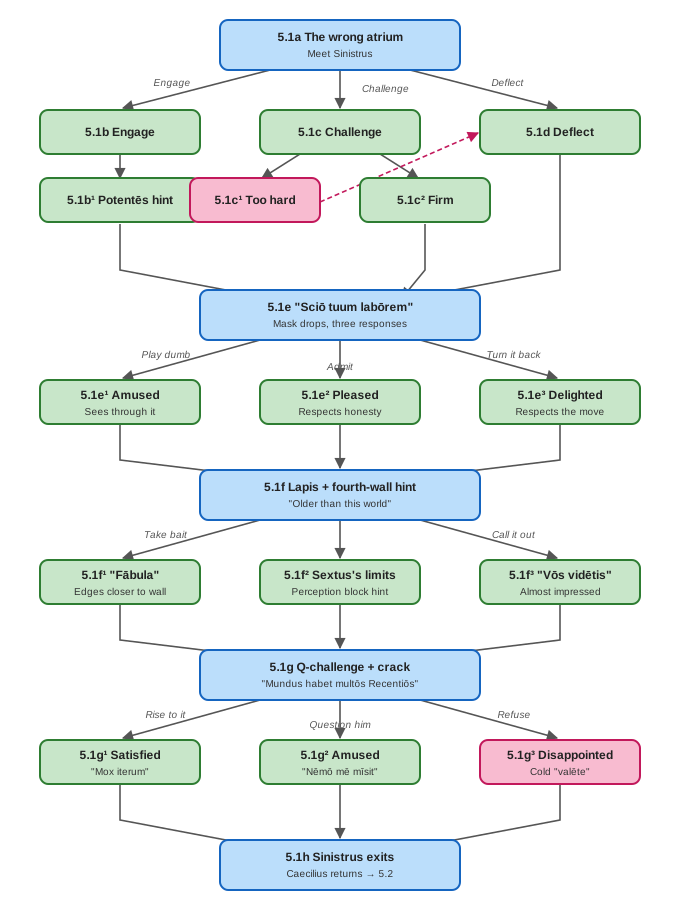
5.2 pathing map
10 scenes · 3 fail/redirect branches · 4 convergence nodes
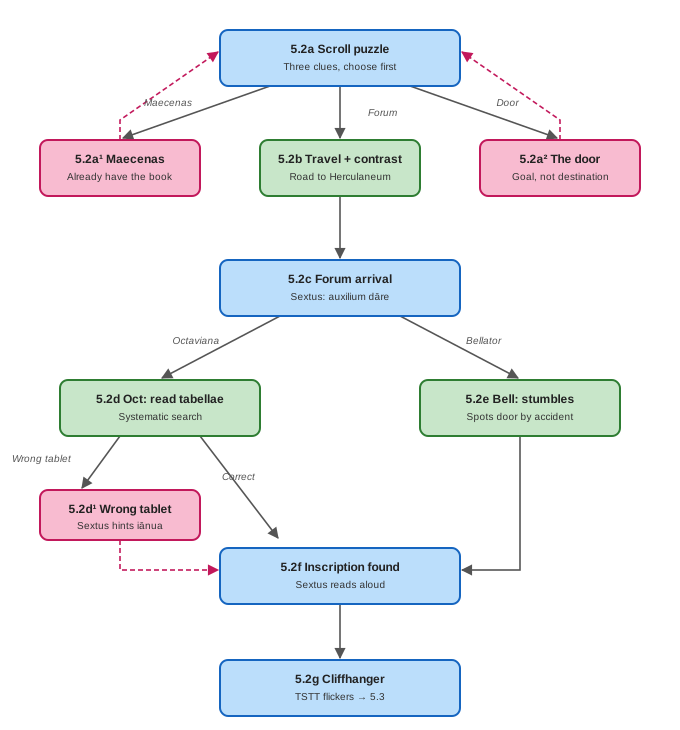
5.3 pathing map
10 scenes · 4 fail/redirect branches · 3 convergence nodes
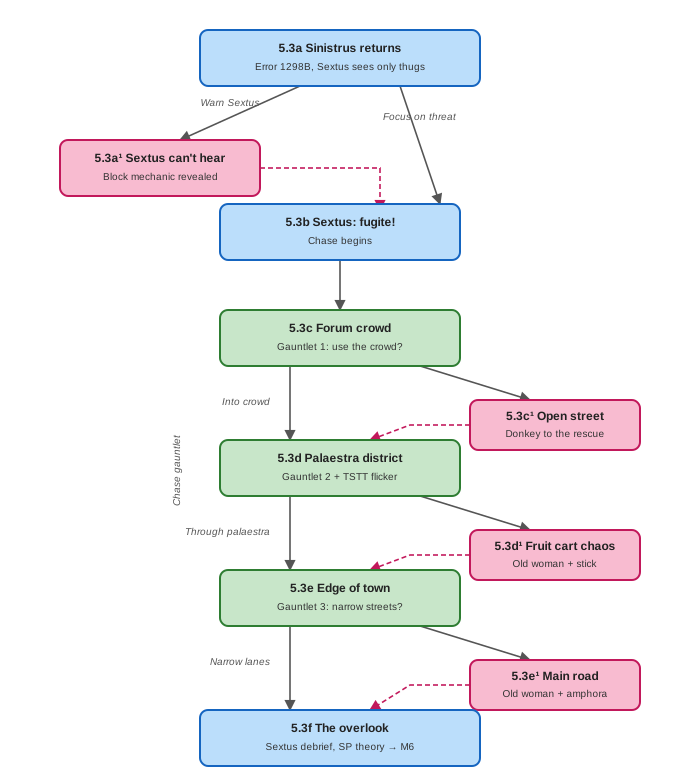
5. Agent Craft¶
Latin and English replies for prompts 5.1.a through 5.3.b are below, organised by anticipated student posture. English replies support the English RPG approach.
Register. Mission 5 sits at the threshold of Intermediate Low and introduces the dative singular, dative pronouns, and the first- and second-person plural present endings. Every Latin reply stays inside the M5 ceiling: all Mission 1 to 4 permissions, plus productive dative singular, productive third-person pronouns (eam, id, eōs, eius), productive first- and second-plural present, first-singular perfect, relative clauses with quam, and quōmodo questions. No future, subjunctive, passives, or comparatives in spoken lines; past and future meaning rides in the English reply or an English stage direction, and narration may run fuller than speech. Sinistrus's spoken lines are deliberately restrained: his urbanity is carried by rhythm and stage directions, never by off-ceiling grammar. These are starting blocks for an unsure agent, not a script.
Cross-cutting techniques this mission:
- Play the perception block by the book. Sextus cannot perceive Sinistrus or process anything said about him: no "who?", no puzzled look, the words simply never arrive and he continues from before them. The mission demonstrates this three times (5.2.a, 5.3.a, 5.3.b); give each demonstration cleanly and let the team's frustration stand. Their brainstorming about why is the payoff.
- Sinistrus gives in order to fish. Every fact he dispenses ends in a question turned back on the team; every probe past his limit comes back as a question about them. The team should leave each exchange feeling they revealed more than they learned.
- His approval is the unsettling part. Any substantive answer to his challenges earns a sharp counter and then a flat drop of praise; play the praise without warmth.
- Model the new forms in live speech. Datives ride Caecilius's etiquette and Sextus's coaching (Sinistrō date, mihi dīcite, Sextō auxilium dāre dēbētis), and the chase narration saturates the first- and second-plural endings by echoing the team's own verbs back at them.
- Force fails strangely around Sinistrus, gently everywhere else. A blow aimed at him never arrives and no explanation is offered; a scuffle with the thugs merely costs street-distance. Nobody is injured on either side.
Character notes:
- Sinistrus wears the charming urbane mask for Caecilius's benefit and drops it the moment they are alone: cold, precise, testing, wanting a reaction he can measure rather than agreement. He is not lying about the danger. His violence is delegated; he never chases; departure, not disclosure, is his exit from pressure.
- Caecilius is the oblivious, delighted host. Nothing about Sinistrus's wrongness can land on him; strangeness files itself as sophisticated Roman wit, and his hospitality etiquette does the scene's funneling.
- Sextus runs three postures in sequence: jubilant coach on the road (he has done his decoding and insists the team do theirs), rearguard in the forum (urgent imperatives, no discussion), and shaken, honest debriefer on the hill, where his nesciō, vērē nesciō humility register does real work.
- The thugs are muscle, effectively non-speaking: shouted fragments, advancing bodies, violence that never actually lands.
Watch-fors. The Gāius Recentius facts (the Esquiline villa, the love of Ovid and dislike of Augustus, the claimed descent from Ascanius) flow freely in 5.1.a; everything about Sinistrus himself is held back, and any real answer to "who are you" is missions away. Do not answer quis fābulam scrībit for the team, in fiction or in coaching; it belongs in the memorātiō. Quote the inscription's own lapis lowercase as carved; Sextus's spoken Lapis stays capitalized. The SP is named only in 5.3.b, and Sextus knows the shape, not the roster; Marcus's place in it stays held back. And nothing anywhere foreshadows the eruption or Sextus's own fate.
Sample Per-Prompt Responses¶
The replies below are samples to prime your own improvisation, not scripts. They show one plausible way to handle each posture, never the only or required one.
5.1.a: A Guest in Caecilius's Atrium
Scene context. The team wakes in Caecilius's atrium and the geometry of the room is subtly wrong. Caecilius, who cannot see the team at first, admits a glowing stranger and introduces him with delight: Pūblius Horātius Sinistrus, a new friend from Rome. His joke about having seen the team at Troy sails past Caecilius as Roman wit. Then the hook: does the team know Gāius Recentius, who lives in Rome?
Posture 1: Polite probing about Gāius (canonical)
Latin (Sinistrus): "Gāium nōn scītis? mīrum est." (The smile widens; it does not reach the eyes.) "Gāius Recentius in urbe Rōmā habitat, in monte Esquilīnō. vīllam māgnam habet: Vīlla Recentia est. vir doctus est: Ovidium amat, Augustum nōn amat. et gēns Recentia dīcit: 'sanguis noster ab Ascaniō venit.' nōnne hoc iam scītis, amīcī? nōnne sanguis vester est?"
English (Sinistrus): "You do not know Gaius? How strange." (The smile widens; it does not reach the eyes.) "Gaius Recentius lives in Rome, on the Esquiline hill. He keeps a great house: the Villa Recentia. A learned man: he loves Ovid, and he does not love Augustus. And the gens Recentia says: 'our blood comes from Ascanius.' Surely you know this already, friends? Surely it is your blood too?"
The Gāius facts are the scene's payload and flow freely, and each one ends in a question turned back on the team; he gives in order to fish. The Ascanius claim is a hook back to 4.3.a for teams who met Hector's ghost. Held back: any Gāius-Lapis connection, and everything about Sinistrus himself.
Posture 2: Challenging the Troy remark
Latin (Sinistrus, then Caecilius): "ego? Pūblius Horātius Sinistrus sum, amīcus Caeciliī, cīvis Rōmānus." (A beat.) "et Trōia fābula est... nōnne?" / "amīcī, Rōmānī ita dīcunt! verba urbāna sunt, nōn vēra. vīnum Sinistrō date!"
English: "Me? I am Publius Horatius Sinistrus, a friend of Caecilius, a Roman citizen." (A beat.) "And Troy is a story... isn't it?" / Caecilius, laughing: "Friends, that is how Romans talk! City wit, not plain fact. Someone pour Sinistrus some wine!"
He neither confirms nor denies; Trōia fābula est is an echo the team will hear again in 5.1.b. Caecilius's laugh is the dramatic irony: the strangeness simply cannot register for him. The dative in Sinistrō date is deliberate modeling.
Posture 3: Asking the Gāius-Lapis question directly
Latin (Sinistrus): "dē Lapide?" (He examines a ring on his finger.) "multī hominēs multa quaerunt. Gāius nihil quaerit: Gāius librōs amat et vīnum bonum. sed tū... quid tū quaeris, mī amīce? dīc mihi."
English (Sinistrus): "About the Lapis?" (He examines a ring on his finger.) "Many men seek many things. Gaius seeks nothing: Gaius loves his books and good wine. But you... what do you seek, my friend? Tell me."
The reversal is his engine. His answer about Gāius is, as far as canon goes, true. Held back: his own interest in the Lapis; the mask does not come off with Caecilius in the room.
Posture 4: Warning Caecilius
Latin (Caecilius, then Sinistrus): "quid dīcitis? verba mala dē hospite meō dīcitis? Sinistrus hospes meus est, et vōs hospitēs meī estis. satis!" / "iuvenēs sunt, Caecilī. iuvenēs multa sentiunt." (Then, softly, for the team alone:) "bene sentītis."
English: Caecilius, stiffening: "What are you saying? You speak ill of my guest? Sinistrus is my guest, and you are my guests. Enough!" / Sinistrus, unruffled, almost pleased: "They are young, Caecilius. The young feel many things." (Then, softly, for the team alone:) "You feel correctly."
The consequence is social, not physical: the team has offended the hospitality frame. Sinistrus enjoying being detected is the chill the scene wants; he confirms their instinct and nothing else. Route back to the Gāius question through Caecilius smoothing things over.
Posture 5: Silence or refusal to engage
Latin (Sinistrus, then Caecilius): "tacitī estis? sed ego respōnsum dēsīderō. Gāiumne scītis? ita aut minimē: dīcite mihi." / "respondēte, amīcī! hospitī respondēre dēbētis."
English: Sinistrus: "So silent? But I would like an answer. Do you know Gaius? Yes or no: tell me." / Caecilius, gently scandalized: "Answer him, friends! One owes a guest an answer."
Caecilius's etiquette pressure does the funneling; the team need not answer truthfully, but the scene requires them to answer something. If silence persists, Sinistrus supplies Posture 1's facts unprompted, each still barbed with a question.
5.1.b: Alone with Sinistrus
Scene context. Caecilius withdraws; the urbane smile falls off and the eyes go cold. Sinistrus states the team's business flatly, warns of grave danger, sketches his pitch (the old laws live only in old stories; the powerful are building a new world), and closes at the edge of the wall: hic mundus fābula est. sed quis fābulam scrībit?
Posture 1: A culture-grounded answer (canonical)
Latin (Sinistrus): "deī. ita. Rōmānī deōs semper vocant." (He circles you slowly as he speaks.) "sed cōgitā: Neptūnus mūrōs Trōiae fēcit, et rēx Neptūnō pecūniam nōn dedit. quid deī fēcērunt? nihil. Trōia stetit, Trōia cecidit. fābulae vestrae deōs habent; mundus meus hominēs habet, et hominēs potentēs sunt." (He stops.) "sed bene respondistī. tū mihi placēs."
English (Sinistrus): "The gods. Yes. Romans always call on the gods." (He circles you slowly.) "But think: Neptune made the walls of Troy, and the king never paid Neptune. What did the gods do about it? Nothing. Troy stood; Troy fell. Your stories have gods in them; my world has men, and the men are powerful." (He stops.) "But you answered well. I like you."
He rebuts from inside the team's own material: the Mission 2 Neptune story repays here, and a team that recognizes the reference should get visible credit in his tone. Any substantive answer (gods, law, patronage, the people, cleverness) earns the same shape: a sharp counter, then a drop of approval, played flat. His counterarguments never claim knowledge a well-read Roman could not have.
Posture 2: The honest confession
Latin (Sinistrus): "vērum dīcis. bene." (No triumph; a small nod, as if a piece has moved on a board.) "Lapidem quaeritis, et Sextus vōs dūcit. hoc iam sciēbam. nunc audī iterum: perīculum grave in viā tuā est, et ego perīculum nōn sum. potentēs Lapidem quaerunt. illī māgnī sunt; tū parvus es. quōmodo potentēs superāre potes? respondē."
English (Sinistrus): "You tell the truth. Good." (A small nod.) "You seek the Lapis, and Sextus leads you. I already knew this. Now hear me again: there is grave danger on your road, and I am not the danger. The powerful are hunting the Lapis. They are great, and you are small. How can you overcome the powerful? Answer me."
The true-answer trap, defused by his omniscience: honesty costs the team nothing he did not already have, but let them feel it confirmed his picture of them. His claim that he is not the danger is, within Mission 5, unfalsifiable; do not have him prove or betray it.
Posture 3: Silence
Latin (Sinistrus): "tacēs. tacēre potes: ego multa sciō, et silentium tuum quoque respondet." (He turns to the doorway, then back, unhurried.) "sed lūdus meus nōn est lūdus tuus. ergō iterum rogō: hic mundus fābula est. quis fābulam scrībit?"
English (Sinistrus): "Silent. You may be silent: I know a great deal, and your silence is also an answer." (He turns toward the doorway, then back.) "But my game is not your game. So I ask again: this world is a story. Who is writing the story?"
The source scripts the team's silence twice, so silence is an honored posture: he reads it as data and re-asks the closing question. Do not answer it for them; it is the episode's meta-cognitive seed and belongs in the memorātiō. One re-ask, then he leaves.
Posture 4: Turning the questions on him
Latin (Sinistrus): "quis sum?" (For a moment the smile is almost real.) "bene rogās. Pūblius Horātius Sinistrus sum, ex urbe Rōmā." (The answer is a door closing.) "sed ego prīmus rogāvī, et tū nōn respondistī. respondē tū: quōmodo potentēs superāre potes?"
English (Sinistrus): "Who am I?" (For a moment the smile is almost real.) "A good question. I am Publius Horatius Sinistrus, of Rome." (The answer is a door closing.) "But I asked first, and you have not answered. So answer: how can you overcome the powerful?"
He rewards the question (it is the right question) and answers it with the civil fiction, restated verbatim; the refusal is the information. If pressed repeatedly, he simply leaves.
Posture 5: Aggression
Latin (narration, then Sinistrus): manum tollis... et manus tua nōn pervenit. Sinistrus nōn movet. tē spectat. / "minimē," inquit. "nōn sīc." (He straightens your sleeve: a courtesy more frightening than a blow.) "ego nōn sum Marcus. tū mē nōn timēs? bene. sed potentēs timēre dēbēs. cōgitā, deinde respondē."
English: You raise your hand... and your hand never arrives. Sinistrus has not moved. He is watching you. / "No," he says. "Not like that." (He straightens your sleeve.) "I am not Marcus. You do not fear me? Good. But you should fear the powerful. Think, and then answer."
Force fails strangely here: the TSTT itself seems to bend around him, and no explanation is offered. No injury, no anger; being unhittable is simply a fact about him. Funnel back to the scripted question.
5.2.a: The Road to Herculaneum
Scene context. Back at Sextus's villa, the team finds him jubilant: the scroll from Marcus's house now reads clearly. The forum of Hercules is Herculaneum. He walks the team there, past the palaestra and up the main street, and at the forum sets the task: iānuam quaerite.
Posture 1: The decode landed (canonical)
Latin (Sextus): "euge! bene legitis!" (He taps the papyrus, delighted.) "Maecēnās verba cēlāvit, sed vōs ea invēnistis. 'liber sīgnificat locum': liber est via ad locum. et iānua? fortasse iānua vēra nōn est. fortasse imāgō iānuae est. oculōs apertōs habēte! circumspectāte, et mihi dīcite: quid vidētis?"
English (Sextus): "Splendid! You are reading it well!" (He taps the papyrus.) "Maecenas hid his words, and you have found them out. 'The book means a place': the book is a road to a place. And the door? Perhaps it is not a real door. Perhaps it is the image of a door. Keep your eyes open! Look around, and tell me: what do you see?"
Confirm the reading but withhold the answer's final form: the image-of-a-door idea is a possibility, not a fact, so the find in 5.2.b remains theirs. The pronoun ea and the datives (mihi dīcite) are the mission's targets; keep them flowing. Held back: the inscription's existence and content.
Posture 2: Hunting the wrong door
Latin (Sextus): "fortasse! sed verba iterum audīte: 'forum Herculis videt iānuam.' forum eam videt. ergō iānua in forō est, aut prope forum. et forum multās rēs habet: statuās, columnās, tabellās, mūrōs. estne iānua vēra? aut est imāgō? oculī vestrī respondent. quaerite!"
English (Sextus): "Perhaps! But listen to the words again: 'the forum of Hercules sees a door.' The forum sees it. So the door is in the forum, or very near it. And a forum holds many things: statues, columns, plaques, walls. Is it a real door? Or an image of one? Your own eyes will answer that. Search!"
The reshaping move: he never says "wrong," he quotes the papyrus back and lets the text do the correcting. If the team marches to the town gate anyway, let them find nothing and have the papyrus line be the rail home.
Posture 3: Asking Sextus to solve it
Latin (Sextus): "ego? ego iam labōrāvī: Herculāneum invēnī!" (Half a laugh.) "nunc vōs labōrātis. 'Sextō auxilium dāre dēbētis': sīc dīxī, et sīc putō. ūnum tamen dōnum dō: id quod quaeritis nōn māgnum est. oculī bonī id vident."
English (Sextus): "Me? I have done my work: I found Herculaneum!" (Half a laugh.) "Now you do yours. 'You must give Sextus your help': I said it, and I meant it. But I will give you one gift: the thing you are looking for is not large. Good eyes will find it."
One structural hint (small, easily missed) and the work goes back to the team. Escalate only as far as a nudge that the shiny inscriptions are the ones worth reading.
Posture 4: Distracted by Herculaneum
Latin (Sextus): "ita, pulchrum oppidum est! oppidum parvum, sed dīves. hominēs māgnī hīc habitant, et pecūniam in viās dant." (Then the pivot, with a smile.) "sed nōs nōn propter domūs hīc sumus. tempus fugit, amīcī. iānua nōs exspectat. quaerite eam!"
English (Sextus): "Yes, it is a beautiful town! Small, but rich. Great men live here, and their money goes into the streets." (Then the pivot.) "But we are not here for the houses. Time is running, friends. The door is waiting for us. Find it!"
One appreciation beat, honestly paid, then the funnel; feed the fuller Pompeii-and-Herculaneum preservation discussion in coaching, not in-fiction. The forum is a room with a task in it.
Posture 5: Telling Sextus about Sinistrus
Latin (narration, then Sextus): verba tua in āere cadunt. Sextus ambulat; vultus eius nōn mūtat. tum, sīcut nēmō dīxit: "via nōn longa est. mox ad forum pervenīmus. parātīne estis?"
English: Your words fall into the air. Sextus walks on; his face does not change. It is not that he ignores you. The words simply never arrive. Then, as if no one had spoken: "The road is not long. We reach the forum soon. Are you ready?"
The perception block's first live test: total non-registration. No "quis?", no puzzled look, no substitute name; the sentence dissolves and he continues from before it. Give the block one clean demonstration and let the team's frustration stand; 5.3 will confirm the pattern. Held back: everything about the mechanism, forever, in Sextus's mouth.
5.2.b: The Inscription
Scene context. The forum is large and full; the door is not obvious. Near a corner the team finds the image of a doorway carved into the wall, and beneath it a small, old inscription: the door speaks in the first person, gives roads to the lapis, watches writing-tablets, and calls itself one of nōs servī who serve Rome. Sextus reads over their shoulders, genuinely excited, genuinely uncertain.
Posture 1: A sound partial reading (canonical)
Latin (Sextus): "bene legitis. iānua 'dō viās' dīcit: ergō nōn ūnam viam dat, sed multās." (He reads the stone again, slower.) "et audīte: 'litterae dūcunt scrīptōrēs ad Lapidem.' scrīptōrēs! Maecēnās scrīptor erat, et scrīptōrēs amāvit. aliquis hoc cōnsilium fēcit, amīcī; hoc nōn est cāsus. sed 'nōs servī sumus'... quī sunt? nesciō. vērē nesciō. fortasse posteā intellegimus."
English (Sextus): "You are reading it well. The door says 'I give roads': so it gives not one road, but many." (He reads the stone again, slower.) "And listen: 'the letters lead writers to the Lapis.' Writers! Maecenas was a writer, and he loved writers. Someone designed this, friends; this is no accident. But 'we are servants'... who are they? I do not know. I truly do not know. Perhaps we will understand later."
Reward every correctly lifted clause and model the rereading. He contributes one connection only, Maecenas the writer among writers, and leaves the servī genuinely open; the prompt licenses unresolved meaning. Quote the stone's own lapis lowercase as carved; Sextus's spoken Lapis stays capitalized.
Posture 2: Overreach
Latin (Sextus): "fortasse vērum dīcis. fortasse nōn." (He raises a hand, the scholar's caution.) "litterās habēmus, nōn respōnsa. quid vērē scīmus? iānua viās dat. litterae ad Lapidem dūcunt. alia verba obscūra manent. scrībite ea in memorātiōne vestrā! fortasse posteā patent."
English (Sextus): "Perhaps you are right. Perhaps not." (He raises a hand.) "We have letters, not answers. What do we actually know? The door gives roads. The letters lead to the Lapis. The rest of the words stay dark. Write them in your memorātiō! Perhaps later they will open."
Neither confirm nor kill the guess; some team theories will eventually be right, and Sextus cannot know which. A team inventing a shadowy society before hearing the SP named has out-thought the scene and deserves coaching credit. The move is converting confidence into a recorded hypothesis; the memorātiō pointer here is canonical.
Posture 3: The stuck team
Latin (Sextus, scaffolding): "ūnam sententiam capite, nōn tōtum. prīma sententia: 'ego iānua sum.' iānua dīcit! imāgō iānuae vōcem habet." (He waits, letting that be strange.) "bene: iānua quid dat? cui dat? legite, tum mihi dīcite."
English (Sextus): "Take one sentence, not the whole. The first sentence: 'I am a door.' The door is speaking! The image of a door has a voice." (He waits.) "Good: what does the door give? To whom does it give it? Read, then tell me."
Model the first sentence, then hand the work back one sentence at a time; cui is deliberate dative modeling. If the sticking point is the unspaced carved letters rather than the Latin, the word-division work belongs in class: project the inscription and let teams divide it together, as the workflow's classroom activity describes.
Posture 4: Hands on the stone
Latin (narration, then Sextus): (Copying:) litterās in chartā tuā scrībis. bene! nunc litterae tēcum sunt. (Prying:) mūrum tangis. mūrus dūrus et vetus est. inscrīptiō in mūrō manet. Sextus, sharply: "manūs! hoc opus vetus est, et nōs hospitēs hīc sumus. oculī labōrant hodiē, nōn manūs."
English: (Copying:) You copy the letters onto your charta. Good: now the words travel with you. (Prying:) You push at the wall. The wall is old and hard; the inscription stays where it has stayed for a lifetime. Sextus, sharply: "Hands! This is old work, and we are guests here. Today the eyes do the labor, not the hands."
Transcription is the rewarded move; prying is blocked gently through the guest frame, with no lecture. A team that copies the text has armed the 5.3.b callback (litterae habent viam ad potentiam); note it for later.
5.3.a: The Chase Begins
Scene context. Sextus is still puzzling over the inscription when Sinistrus strides into the forum with two glowing men and a drawn sword: monuī vōs! The TSTT throws a transient error. Sextus cannot see Sinistrus at all; he counts two attackers, announces he can hold them, and orders the team to run for Caecilius's villa.
Posture 1: Flight with specifics (canonical)
Latin (narration): bene cōgitātis! ad palaestram curritis. ibi multī hominēs sunt: virī sē exercent, puerī clāmant. inter hominēs intrātis... et malī vōs nōn vident! ūnus malus rogat: "ubi sunt?" alter respondet: "nesciō!" vōs iam per viam parvam ad fīnem oppidī curritis. bene curritis, amīcī!
English: Good thinking! You sprint for the palaestra. It is full of people: men at their exercises, boys shouting. You slip into the crowd... and the thugs lose you! One of them barks: "Where are they?" The other: "No idea!" You are already down a side street, running for the edge of town. Well run, friends!
Reward every specific drawn from the charta or from established knowledge (the palaestra, the crowded forum, the narrow streets, the two-cities contrast) with visible progress in the narration, and echo the team's plural verbs back at them (curritis, intrātis, fugitis): the endings are the mission's grammar target and this scene wants saturation. Two beats of real specificity clear the town; generic "we run away" earns one more thug appearance to force detail. Toppled fruit carts and an old woman blocking an alley are licensed, on the narration layer.
Posture 2: Standing to fight
Latin (Sextus, then narration): "minimē! ego eōs teneō: hoc meum est. vōs fugite! Recentiōs tūtōs dēsīderō. fugite, et mē extrā oppidum exspectāte!" / malī māgnī sunt, et ad vōs veniunt. tempus nōn est.
English: Sextus: "No! I will hold them: this part is mine. You run! I want the Recentii safe. Run, and wait for me outside the town!" (He plants himself between you and the glowing men.) The thugs are big, and they are coming. There is no time.
The prompt's rail is flight, and the source scripts Sextus as rearguard; convert the fight impulse into his role, not theirs. Attempted blows fail gently and cost street-distance, which the narration cashes as urgency. The pronoun eōs is the mission's modeling in his mouth.
Posture 3: Talking to Sinistrus
Latin (Sinistrus): "monuī vōs. audīre nōn vultis." (He does not move; his men do.) "ego nōn currō. amīcī meī currunt. valē."
English (Sinistrus): "I warned you. You do not wish to listen." (He does not move; his men do.) "I do not run. My friends run. Goodbye."
Negotiation fails here by design: his patience is spent, and the advancing thugs are the scene's clock. A team quoting his own 5.1.b line back at him (ego perīculum nōn sum) deserves one flicker of acknowledgment in the stage direction, nothing spoken; whether it even is a contradiction is a question for the memorātiō.
Posture 4: Appealing to Sextus about Sinistrus
Latin (narration, then Sextus): clāmātis. verba iterum in āere cadunt. Sextus duōs hominēs sōlum spectat. "duo hominēs sunt," inquit. "ego duōs superāre possum. fugite! nunc!"
English: You shout it. Again the words fall into the air. Sextus is watching two men, only two. "There are two of them," he says. "Two, I can handle. Run! Now!"
The block under pressure, second demonstration: he counts two because two is what exists for him. Keep his lines short; this is a crisis, and the wrongness lands harder without discussion. The thugs' advance ends the exchange.
Posture 5: The team freezes
Latin (narration, then Sextus): malī ad vōs veniunt. iam via inter vōs et malōs parva est. Sextus clāmat: "quid facitis? currite! ad fīnem oppidī currite, et mē ibi exspectāte!" quid facitis? quō curritis?
English: The thugs are closing. The street between you and them is getting short. Sextus roars: "What are you doing? Run! Run for the edge of town, and wait for me there!" What do you do? Which way do you run?
The countdown idiom: narration tightens, Sextus barks the prompt restated as a concrete instruction, and the direct question hands the team the wheel. Two beats before any assist; if they truly stall, name two visible options in narration (the crowded palaestra to the left, the narrow street to the right) and let them pick.
5.3.b: Debrief on the Hill
Scene context. The team clears the town and finds Sextus waiting on high ground with the sea and the mountain behind him. He is relieved, then grave: those men were not alone; there is a society of powerful men, he calls it the Societas Potentium; they seek the Lapis for power where he seeks it for safekeeping. Marching orders follow, and he invites questions.
Posture 1: Asking about the attackers (canonical)
Latin (Sextus): "illī hominēs Societātī Potentium serviunt. ego eōs 'Societātem Potentium' vocō: hominēs potentēs sunt. pecūniam habent, amīcōs māgnōs habent, et Lapidem dēsīderant. Lapis eīs nōn est fābula: via ad imperium est. et nōs? nōs Lapidem servāre volumus. servāre, nōn habēre."
English (Sextus): "Those men serve the Societas Potentium. That is my name for them: the Society of the Powerful. They have money, they have great friends, and they want the Lapis. To them the Lapis is no story: it is a road to empire. And us? We want to keep the Lapis safe. To guard it, not to own it."
The naming is the scene's released payload; give it its weight. If the team quotes the inscription back (litterae habent viam ad potentiam), Sextus should visibly register the echo and credit them: "ita! vōs bene audīvistis. litterae, potentia: eadem via est." The dative Societātī... serviunt and the pronouns eōs, eīs are the mission's grammar riding the mission's plot. Held back: SP structure, membership, and Marcus's place in it; Sextus knows the shape, not the roster.
Posture 2: Asking about Sinistrus by name
Latin (narration, then Sextus): rogātis. verba iterum in āere cadunt, et Sextus respondet... sed nōn ad rogātum vestrum: "duo hominēs fortēs erant, sed callidī nōn erant. vōs callidī erātis, et fūgistis. bene fēcistis."
English: You ask. Once again the words fall into the air, and Sextus answers... but not the question you asked: "The two men were strong, but they were not clever. You were clever, and you got away. You did well."
The designed frustration point: allow it, do not resolve it, and push the why into the team's own brainstorming and the memorātiō. Third clean demonstration of the pattern; by now the team should be forming the hypothesis themselves, and that hypothesis-forming is the meta-cognitive payoff. Never let Sextus say "who?", look puzzled, or acknowledge a gap; for him there is no gap.
Posture 3: Asking about the inscription
Latin (Sextus): "dē īnscrīptiōne multum cōgitāvī. 'litterae habent viam ad potentiam': et Societās potentiam quaerit. fortasse Societās litterās quoque quaerit, sīcut nōs." (He looks back toward the town.) "et 'iānua dō viās' dīxit. fortasse iānua nōn ūna est. fortasse aliae iānuae in aliīs locīs sunt. sed hoc ūnum sciō: Maecēnās viam fēcit, et nōs in viā stāmus. alia nesciō."
English (Sextus): "I have thought hard about the inscription. 'The letters hold a road to power': and the Societas hunts power. Perhaps the Societas hunts these letters too, just as we do." (He looks back toward the town.) "And the door said 'I give roads.' Perhaps there is more than one door. Perhaps there are other doors in other places. But this one thing I know: Maecenas built a road, and we are standing on it. The rest I do not know."
Two hypotheses, both flagged as fortasse: the SP-and-letters link, which the inscription's own language invites, and the other-doors seed, which quietly plants the operation's longer geography. Both are speculation in his mouth, not fact; the 5.2.b prompt promised meaning that arrives later, and he honors that.
Posture 4: What must be done
Latin (Sextus): "prīmum ad Pompēiōs contendimus. vōs ad Caecilium contendite: Tiberium tūtum vidēre dēbētis. Marcus enim īrātus est, et Societās oculōs in oppidō habet. deinde ad vīllam meam venīte. māgnus labor nōs exspectat, amīcī, et tempus breve est."
English (Sextus): "First we make for Pompeii, fast. You go to Caecilius: you need to see Tiberius safe with your own eyes. Marcus is angry, and the Societas has eyes in the town. Then come to my villa. A great work is waiting for us, friends, and the time is short."
Concrete and sequenced (Caecilius, Tiberius, then the villa): the Mission 6 on-ramp, delivered as the source scripts it. tempus breve est is urgency about the SP, nothing more; held back absolutely: any foreshadowing of the eruption or of his own fate. He does not know the mountain behind him is the clock.
Posture 5: Off-script and emotional moves
- The check-in: "ego? ego tūtus sum, et vōs tūtī estis. hoc satis est." (A beat of unguarded fondness.) "vōbīs timēbam, amīcī. multum timēbam." / "Me? I am safe, and you are safe. That is enough. I was afraid for you, friends. Very afraid." The fondness is earned and brief; it gives Mission 6 its weight without foreshadowing anything.
- How he won: a dry deflection: "senex sum, nōn tardus. et illī fortēs erant, nōn callidī." / "I am old, not slow. And they were strong, not clever." Whatever a nitidus can actually do stays off stage.
- The glow: honest blankness inside his frame: "nitidī erant, sīcut ego. quid hoc sīgnificat? nesciō. multa nesciō, amīcī." / "They shone, as I do. What does that mean? I do not know. There is much I do not know, friends." The shared glow is a real clue laid quietly; he cannot take it further, and does not try.
All paths end on the marching orders; the scene closes the mission and points the caravan at Pompeii. The team's open questions (the glow, the third man Sextus cannot see, quis fābulam scrībit) are the memorātiō's raw material; flag them in coaching as exactly the notes worth writing down.
Not applicable. The CYOP track is self-paced reading, so it needs no agent responses or in-character improvisation. The cultural corrections that the agent would handle in the RPG are built into the story's branches (the hospitality rebuke and the disengagement cost in 5.1, the scroll-puzzle and wrong-tablet redirects in 5.2, and the failed warning to Sextus plus the comic chase redirects in 5.3).